The NDP has stayed mum on a major expansion in Canadian war fighting capacity. The Naval Deployment Party has been staunchly pro-navy since long before Russia’s invasion or Trump’s annexation threats.
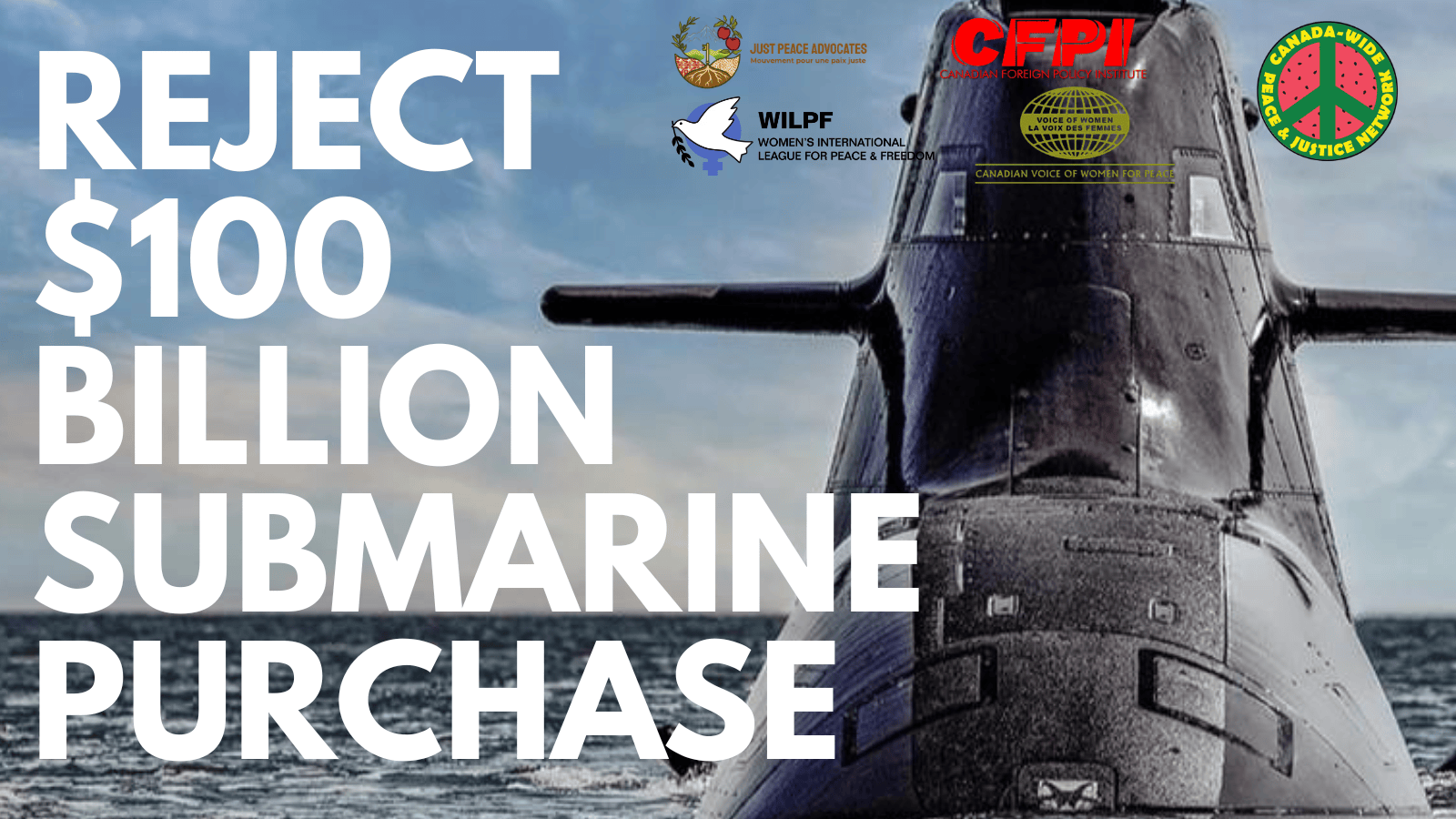
In a major militarist expansion, Mark Carney recently announced the purchase of a dozen German submarines set to be equipped with cruise missiles. Two weeks after the announcement — and months into the submarine discussion — the NDP has stayed mum on what’s expected to cost a $100 billion. Despite portraying himself as peace minded and receiving support from many anti-war activists, Avi Lewis has continued with Naval Deployment Party policy.
It’s similar to the party’s response to the destroyer class (surface combatant) procurement, which are expected to cost a quarter trillion over their lifecycle. In my 2021 “Why isn’t the NDP questioning the largest military procurement in Canadian history?” I wrote, “Amidst growing media criticism, NDP Defence Critic Randall Garrison has said nothing regarding the frigates’ cost, the secrecy surrounding the project, or the offensive weaponry set to be equipped on the warships. Garrison hasn’t released a single tweet (or retweet) about any of the recent stories on the surface combatant vessels. This is beyond disappointing. What is the point of having a defence critic if they are unwilling to question or challenge the largest military procurement in Canadian history?”
The federal NDP aggressively promoted the 2010 National Shipbuilding Procurement Strategy, which was launched by Stephen Harper’s Conservatives to expand the combat fleet over three decades. “Our current ships have reached the end of their operational lives”, said party leader Jack Layton in 2011. “They need to be replaced immediately.” In 2015, defence critic Jack Harris bemoaned, “Conservative delays” undermining “our navy from getting wanted equipment.” The 2015 party platform said it would “carry forward the National Shipbuilding Procurement Strategy to ensure Canada has the ships we need.” (In the late 1980s the NDP “agreed with the strengthening of the Navy”, notes naval historian Tony German, and during the 1984 election campaign party leader Ed Broadbent “deplored the Navy’s near demise.”)
But the purchase of 15 heavily armed frigates and a dozen submarines will strengthen Canadian officials’ capacity to bully weaker countries and accompany US naval patrols across the globe. From the Caribbean to the South China Sea, the Canadian navy supports US naval power projection. The Royal Canadian Navy assisted the war on Libya in 2011, US blockade of Iraq before its illegal 2003 invasion and repeated strikes on the West Asian country in the late 1990s.
The 2000 book Canadian Gunboat Diplomacy details numerous interventions to exert a delicate and subtle threat short of declared war. In 1921 three vessels were sent to Costa Rica to pressure the government to repay money the Royal Bank loaned a dictator as he fled a popular revolt while in 1932 a Canadian ship provided support to an El Salvadorian dictatorship as it put down an Indigenous rebellion, which ultimately led to the execution of famous revolutionary, Farabundo Marti.
Many factors drive Naval Deployment Party policy. The NDP generally supports the military and its deployments (from wars in Libya to stationing troops in Latvia to Operation Proteus in the occupied West Bank).
Provincial party support is also a factor. In recent days Nova Scotia NDP leader Claudia Chender has expressed support for submarine contracts and the Nova Scotia NDP government put money up for Harper’s Shipbuilding strategy (during the NDP leadership race candidate Rob Ashton praised the Nova Scotia NDP for working with the union and federal government to promote the destroyer class procurement). On the other side of the country, BC NDP Premier David Eby has also expressed support for the submarines.
Another part of the political calculation is that regions with naval bases have also been places where the federal NDP has had success. Former NDP defence critic Garrison represented the riding that included the Esquimalt base and the NDP considers a number of seats in the Victoria area winnable (while there’s a naval base in the region, Vancouver Island is also one of the most antiwar parts of country). To a lesser extent, there’s a similar dynamic in the Halifax area. Former NDP defence critic and longtime Veterans Affairs critic Peter Stoffer represented parts of the Halifax base for nearly two decades.
Over the past few days some two thousand individuals have emailed NDP leader Avi Lewis and Elizabeth May to call on them to challenge the submarine purchase. There are many important questions to be asked: about the obscene cost, spending priorities, questionable domestic economic benefits, support for US militarism, the ecological toll, expansion of war fighting capacity, the desirability of addicting our economy to war, etc. Instead, Lewis has so far chosen to continue being leader of the Naval Deployment Party.
Join some two thousand who have emailed NDP leader Avi Lewis and Green leader Elizabeth May asking them to oppose Carney’s costly submarine purchase.
Support Yves’ work. Donate Now.



You must be logged in to post a comment.